

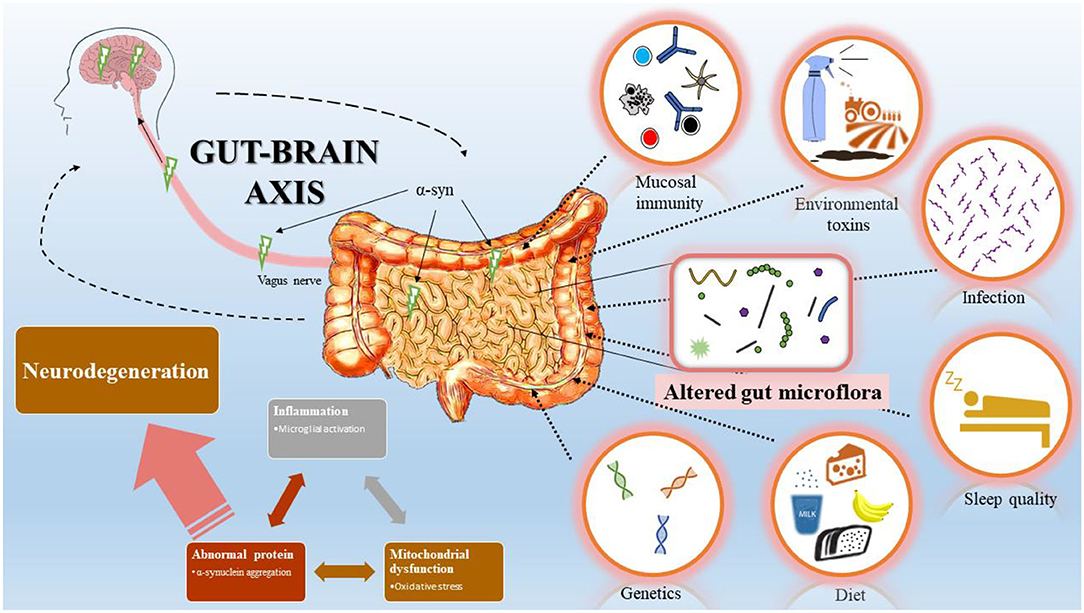
A decade ago, the claim that gut bacteria influence mood was a conference icebreaker. Today it is a research programme with clinical trials, and while the field’s early hype deserved the teasing it received, the careful version of the gut-brain story has become genuinely difficult to dismiss. The gut houses a nervous system of its own, communicates with the brain through the vagus nerve, immune signals and microbial metabolites, and produces a large share of the body’s serotonin precursors. The conversation between the two organs is constant; science is learning to listen in.
The human evidence is accumulating in layers. Diet interventions rich in fermented foods and fibre have measurably altered stress markers and microbial diversity in controlled trials. Specific microbial patterns recur in studies of depression and anxiety, inconsistently in detail but persistently in direction. Trials of targeted probiotics, psychobiotics in the field’s hopeful coinage, show small but real effects in some populations. We follow the evidence as it hardens in our health coverage, where the microbiome is treated as a serious organ with an unserious marketing department.
What the field is not saying
The researchers themselves supply the caveats. Correlation dominates; the depressed gut may reflect the depressed life, its diet, sleep and medications, as much as cause it. Commercial tests that promise to diagnose your mood from a stool sample are running far ahead of any validated science. And the microbiome’s individuality, closer to a fingerprint than a blood type, complicates every attempt at a universal prescription.
The personalisation problem
The obstacle between the research and the clinic is individuality. Two people can eat the same meal and host microbial communities as different as two forests, shaped by birth, geography, medication history and a thousand meals since. Interventions therefore land unevenly, transformative for one gut, inert in another, and the field’s current work, stratifying patients by their microbial starting point before treatment, is an admission that the era of the universal probiotic recommendation was always a placeholder.
That is a more mature science than the one that promised to read fortunes in stool samples. The gut-brain axis will likely enter medicine the way genetics did: not as a single test, but as a layer of context that makes existing treatments smarter.
The practical residue
Strip the hype and the advice is almost disappointingly traditional: dietary diversity, fibre, fermented foods, restraint with unnecessary antibiotics, sleep. The revolution, if it completes, will be in precision, matching interventions to an individual’s microbial ecology, and in psychiatry’s slow admission that the brain’s chemistry has a downstairs neighbour. The gut has been talking all along. The surprise is only that medicine took this long to check who was listening.
The conversation continues, in both directions.
